Backup generators and battery systems can be lifesavers when the power goes out. Whether you’re a homeowner, a small business, or a large commercial facility like a Hawaiian resort, having a reliable backup power source can mean the difference between operational chaos and seamless continuity. However, not all generators are created equal, and their ability to power your property depends heavily on how much load they’re tasked with. This makes it critical to understand which loads are connected to your backup generator or battery system, especially in Hawaii, where grid outages can be common.
The Challenge of Power Outages and PSPS in Hawaii
Hawaii’s unique geography and climate make it particularly susceptible to natural hazards. From hurricanes to wildfires, the islands face risks that can compromise the electric grid. Public safety power shutoff (PSPS) events, which are activated to help prevent wildfires during high-risk weather conditions, may become more common in the near future, especially when looking at California as the model. More information on the Hawaiian Electric PSPS Plan can be found here: Public Safety Power Shutoff (PSPS) | Hawaiian Electric While these planned outages may be necessary for community safety, they can create significant challenges for residents, businesses, and especially large commercial facilities like resorts and hospitals. Ensuring that your backup generator is prepared to handle the essential loads during these events is key to weathering the outages with minimal disruption. For hospitality operations, a power outage isn’t just an inconvenience, it’s a potential threat to guest safety, operational continuity, and business reputation.
Why Understanding Your Emergency Loads Is Crucial
- Preventing Overloads: Generators and batteries have limits. Connecting too many appliances and systems to a generator can cause it to become overloaded, leading to potential failure or damage. This is particularly critical for large commercial facilities like resorts, where the stakes are high. A power failure can mean compromised guest safety, lost revenue, and significant operational disruptions.
- Prioritizing Critical Systems: During a power outage, not every device or system is equally important. For a resort, this means distinguishing between essential and non-essential loads. Critical systems might include:
- Emergency lighting in common areas and guest rooms
- Elevator and accessibility systems
- Communication systems (front desk, guest room phones, Wi-Fi)
- Security and access control systems
- Critical refrigeration for food services and perishable inventory
- Medical response facilities
- Server rooms and data centers
- Life safety equipment such as fire alarm systems
- Optimizing Fuel Efficiency: Generators rely on fuel — whether gasoline, diesel, or propane. An overloaded generator will burn through fuel faster, potentially leaving you in the dark before the outage ends. By managing connected loads, you can optimize fuel usage and extend your generator’s runtime. For resorts, this means developing sophisticated load-shedding protocols that can dynamically adjust power allocation based on current occupancy and critical needs.
- Avoiding Equipment Damage: Sensitive electronics like computers, TVs, and medical devices can be damaged by inconsistent power supply. When you know what’s connected to your generator, you can ensure surge protectors or voltage regulators are installed for devices that require stable power.
- Advanced Energy Management: Batteries and generators can work in tandem with sophisticated smart energy management systems to prioritize essential loads, balancing power distribution and optimizing energy use across a facility. For resorts, this might mean integrating solar + battery systems to reduce fuel dependency and create a more sustainable backup power strategy.
Steps to Identify and Manage Connected Loads
- Conduct a Load Assessment. Start by listing all the appliances, devices, and systems you want to power during an outage. Note their wattage or amperage requirements, which can usually be found on the device’s label or user manual. For a resort, this goes beyond typical residential considerations and includes complex infrastructure like:
- Kitchen equipment and hood fans
- Water treatment and pumping systems
- HVAC systems and compressors
- Point-of-sale systems
- Event management technology
- Guest room electronics
- Telecommunications and internet
- Chillers and cooling systems
- Categorize by Priority. Divide your systems into “critical,” “essential,” and “non-essential” loads:
- Critical: Life safety systems, medical equipment, core communication infrastructure, strategic lighting, fire alarm systems.
- Essential: Basic operational systems needed to maintain guest safety and minimal services, such as elevators and lights.
- Non-essential: Comfort and convenience systems that can be temporarily suspended.
- Match Loads to Generator or Battery Capacity. Compare the total wattage of your essential loads to your generator’s output capacity. Make sure there is enough buffer to avoid running the generator at maximum capacity for extended periods, which can shorten its lifespan. If you don’t have a generator or back up battery, use the Load Assessment to size your back up power source needs.
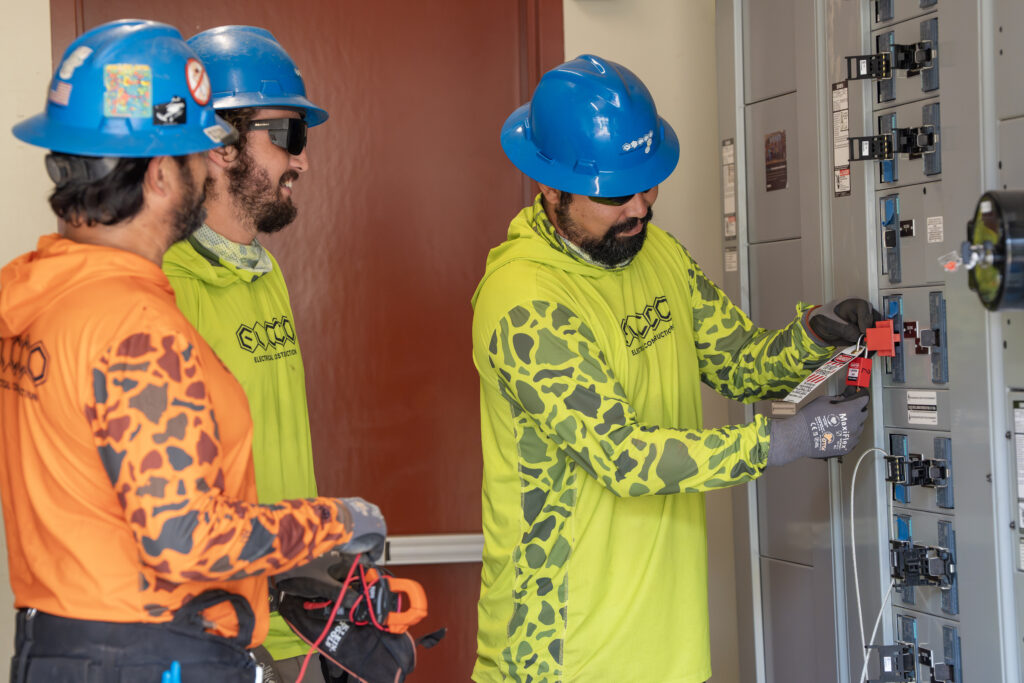
- Work with an Electrician. For complex facilities like condos, resorts, and hospitals, consulting with electrical engineers who specialize in commercial and industrial infrastructure is crucial. They can help:
- Design redundant power architectures
- Create sophisticated load-shedding protocols
- Ensure compliance with hospitality and safety regulation
- Test Regularly. Conduct periodic tests of your generator under load conditions. This ensures it’s functioning properly and will help you identify any adjustments needed to your load management plan. This isn’t just about ensuring the generator works, but about testing your entire emergency response protocol.
Backup Power for Commercial Facilities: Generators vs. Battery Systems
Both fuel-powered generators and battery backup systems play critical roles in ensuring uninterrupted power for home and commercial facility essential loads. These systems are essential for businesses, hospitals, data centers, and other operations where even brief outages can have serious consequences. For large facilities with critical infrastructure this requires creating a resilient, multi-layered power strategy. Here are key considerations for using both systems effectively:
Fuel-Powered Generators
- Reliable for High Power Demands: Generators are well-suited for facilities with significant power requirements. They can handle large HVAC systems, industrial machinery, and other heavy loads that exceed the capacity of most battery systems.
- Extended Runtime: Generators can run continuously as long as they are supplied with fuel, making them ideal for prolonged outages. Facilities should ensure adequate fuel storage and delivery plans to sustain operations during extended PSPS events.
- Essential Load Support: Generators can be configured to prioritize critical systems such as medical equipment, life support, data servers, and refrigeration. A properly designed transfer switch ensures these loads receive uninterrupted power.
Battery Backup Systems
- Seamless Transition and Reliability: Batteries provide instant power without any delay, ensuring critical systems and equipment remain operational during an outage.
- Integration with Renewable Energy: Many commercial facilities in Hawaii are adopting solar PV energy systems. Batteries integrated with solar panels allow these facilities to harness renewable energy during daylight hours and store it for use at night or as emergency back-up power during PSPS events or other outages.
- Scalable Solutions: Battery backup systems can be scaled to match the energy requirements of large operations, making them suitable for facilities that have high power demands.
- Reduced Dependency on Fuel: During prolonged outages or disasters, fuel supply chains can be disrupted. Battery systems eliminate the need for fuel logistics, reducing the risk of power loss due to fuel shortages.
- Advanced Energy Management: Batteries can work in tandem with sophisticated energy management systems to prioritize essential loads, balancing power distribution and optimizing energy use across a facility.
By leveraging the strengths of both generators and battery systems, commercial facilities can create a resilient power strategy that minimizes risks during forced or planned outages. Additionally, the Hawaii Public Utilities Commission recently approved a new program for battery storage devices: Decision and Order No. 41616. The program is called Bring Your Own-Device Plus (BYOD+) and will provide an attractive upfront incentive as well as a retail rate export compensation for participation in the Demand Response and grid load management program.
The Hawaii Perspective
Living in Hawaii adds unique considerations to generator use. With limited access to fuel during emergencies, efficient generator use becomes even more critical. PSPS events may last longer than anticipated, and Hawaii’s remote location means residents must be more self-reliant. By carefully managing your generator or battery loads, you can make the most of your backup power while minimizing risks and disruptions. Resorts, in particular, have a responsibility not just to their guests and operations, but often to the broader community during disaster scenarios.
Conclusion
Whether you’re a homeowner or managing a large resort, a backup power strategy is about more than just keeping the lights on. It’s about maintaining safety, ensuring operational continuity, and protecting your investment. In Hawaii, where natural hazards are a reality, being proactive about your backup power isn’t just smart, it’s essential. By carefully understanding and managing your connected loads, you can create a robust, resilient power strategy that keeps you running smoothly, no matter what challenges come your way. Be proactive, stay prepared, and ensure your backup generator or battery system is ready to power you through any outage. Want to ensure your facility is prepared for the next outage? Contact an expert for a backup power assessment today.