
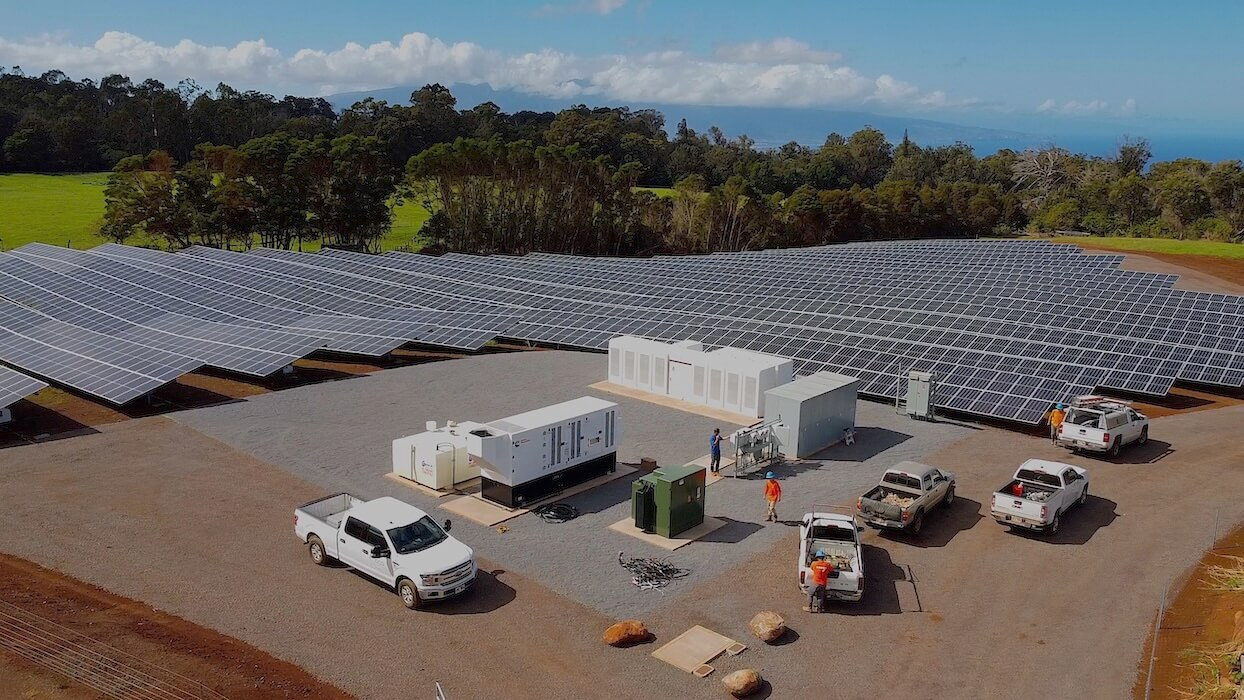
If your business has been on the fence about investing in a commercial PV solar and battery system, now is the time to act, and the window is closing in fast. In Hawai’i, 2025 presents a powerful convergence of incentives, market conditions, and policy uncertainties that make this year and early 2026 possibly the last “best window” to lock in long-term savings, energy independence, and resilience.
Here’s why your company should seriously consider taking action now:
1. Federal Tax Credits Are Slipping Away – But You Can Still Qualify
The 30% federal Investment Tax Credit (ITC) remains one of the most valuable financial tools for commercial solar and battery projects. While the Inflation Reduction Act (IRA) extended the ITC through 2032, the recently passed One Big Beautiful Bill (OBBB) will phase out these credits for projects placed in service after December 31, 2027. Based on late edits to the legislative text, however, a grandfather rule would preserve full eligibility of the credits for wind and solar projects that start construction before the date that is 12 months following enactment of the Bill or July 4, 2026.
There is still time to act: The good news is that safe-harbor rules still apply to be eligible for the ITC.
What the Bill Does to ITC for Commercial Projects
- Phases out Section 48E ITC for wind and solar placed in service after December 31, 2027, unless construction begins by July 4, 2026
- If your project starts construction within 12 months of the bill’s enactment (i.e., by July 4, 2026), you can still qualify—but you must place the project into service:
- By December 31, 2027, under the original schedule.
- Or, if qualifying under safe-harbor, extended to roughly mid2030
How to Safe Harbor for ITC
You can lock in ITC eligibility by safe-harboring—which has two main paths:
- Spend at least 5% of the project’s total cost by July 4, 2026 – this can be achieved by ordering and receiving PV panels and equipment.
- Begin physical work of a significant nature at the site (or factory for tailored equipment) before July 4, 2026.
Once safe-harbored, your project has four years to reach commercial operation, as long as it meets continuity requirements (either by demonstrating steady progress or meeting the 4-year deadline).
2. Hawai’i State Tax Incentives are in the Political Crosshairs
Hawai’i offers one of the most attractive solar tax credits in the country — a 35% state tax credit. For commercial systems, this credit can be substantial, though caps apply depending on system size and business structure – typically the refund caps out at $500,000.
House Bill 796 recently passed the Legislature, this bill would prematurely phase down or sunset Hawaiʻi’s Renewable Energy Technologies Income Tax Credit, known as the RETITC, a foundational policy that has made solar and storage affordable for tens of thousands of families and small businesses. Thankfully Governor Green vetoed the bill in early July 2025.
Political pressures continue to mount. If your commercial or industrial project qualifies this year, you’re potentially locking in combined federal and state tax benefits (65% of its cost offset through tax credits) that could dramatically shift against you next year.
3. Hawai’i’s Extreme Energy Costs Demand Immediate Action
The numbers are staggering, Hawaii consistently ranks #1 for highest electricity rates in the U.S. As of 2025, HECO residential customers on Oahu pay approximately 43 cents per kilowatt hour — more than twice the national average of 16 cents. Commercial rates are often even higher when demand charges are factored in.
For commercial properties, this creates an urgent financial imperative:
- Immediate Cost Relief: Cut your electric bill by 50-100% depending on your usage profile, size of PV system and utilization of a battery energy storage system
- Demand Charge Mitigation: Battery storage can significantly reduce expensive demand charges that often represent 30-50% of commercial bills
- Protection Against Rate Increases: Hawaii residents will face additional rate hikes in in our future, making solar even more valuable
- Fast ROI: Unlike mainland projects requiring 7-10 year payback periods, Hawaii commercial systems often achieve ROI in 3-5 years
- Real-World Impact: A typical 100kW commercial system in Hawaii can save $50,000-80,000 annually in electricity costs, with total project savings exceeding $1 million over the system’s 25-year lifespan.
4. Battery Storage is Becoming a Strategic Necessity
Potential Time-of-Use (TOU) rates and other incentives could fundamentally change the battery value proposition:
- Demand Management: Battery systems help avoid expensive peak demand charges during high-cost periods. Future-proof your energy costs with rate changes
- Grid Support Incentives: HECO is increasingly offering programs that compensate battery owners for grid support services l
- Strategic Advantages: Commercial properties with battery storage can now monetize their systems in multiple ways — reducing their own costs while potentially earning revenue from grid services such as BYOD Plus.
5. Supply Chain and Interconnection Pressures Are Building
Critical timing factors that can’t be ignored:
- Equipment Lead Times: Quality commercial-grade inverters, battery systems, and PV modules may have 3-6 month lead times.
- Contractor Availability and Expertise: The best commercial solar contractors are booking projects 6-12 months in advance, and less experienced contractors may not have knowledge or experience maximizing customer benefits
- Permitting Backlogs: Some county permitting departments are seeing increased application volumes and sever backlogs
6. Resilience Is Now a Business Continuity Issue
Hawaii’s aging grid infrastructure and increasing extreme weather events, energy resilience is longer optional:
- PSPS Events: Public Safety Power Shutoffs are becoming more common during high wind and dry condition events. The duration of these weather related outages are yet to be determined.
- Grid Modernization: HECO’s transition to distributed energy resources means battery-equipped buildings become valuable grid assets. Moving away from a traditional grid system with large thermal units fired by fossil fuels is novel, and could lead to increased grid disruptions.
- Business Continuity: Uninterrupted operations during outages can save tens of thousands in lost productivity and revenue
Businesses with solar + battery systems often report improved customer confidence and operational reliability, translating to competitive advantages and reduced insurance costs.
7. Financing Options Are Currently Optimal
Market conditions that won’t last forever:
- Low Interest Rates: Commercial financing rates remain relatively favorable compared to future forecast. PPA financing rates are available for zero down options.
- Accelerated Depreciation: MACRS (Modified Accelerated Cost Recovery System) allows businesses to depreciate solar systems over 5 years, providing additional tax advantages
The Opportunity Is Now
Between generous, but time-limited tax credits, high utility rates, policy uncertainty, and increasing urgency for grid resilience, 2025–mid-2026 may be the last optimal window for commercial solar and battery deployment in Hawai‘i.
ELCCO has helped facilities across the islands design and deliver customized, incentive-maximizing renewable systems. Whether you’re considering a large solar array, battery storage, or a full microgrid, we’re here to help you secure the benefits before they disappear.
Let’s start the conversation today — before the opportunity passes. Contact ELCCO today to schedule your complimentary commercial solar assessment and learn how much your business can save with a custom PV and battery storage solution.
